
Ⅰ

Homemade SwordCommon One-Handed Swords
16Slashing Damage
Armor Penetration+5%
Accuracy+3%
Block Chance+2%
Bleed Chance+8%
Skills Energy Cost+5%
Apparently, it was forged by a commoner with a dream of heroic feats.
100
Choose weapons, armor, and jewelry, then aggregate item stats. V1 does not calculate skill cost, cooldown, DPS, or unconfirmed final build formulas.
Equipment, images, tier, rarity, and stats come from wiki_data.json; classification is not inferred from image or display names.
Apparently, it was forged by a commoner with a dream of heroic feats.

A simple butcher's cleaver, crudely refashioned into a sword-like shape by an unknown craftsman.

Hefty enough to roughen up a training dummy.

A sword that has seen better days. It looks like it's about to crumble to dust.

The only thing it's decent at is splitting firewood.

It seems like someone tried to improvise a battle axe of sorts. Not the worst result, all things considered.

More than a few Aldorian folk songs were shaped to the rhythm of this axe.

The spikes alone are menacing enough to make any tavern loudmouth reconsider his words.

A crude club for a crude peasant.

Clubs like this one are often employed by city guards - don't need anything more substantial to intimidate a pickpocket.

During peacetime these flails are used to thresh wheat. During wartime - to chase off marauding deserters.

As the common folk like to say, a flail is the final argument of peasants.

Passable as a club, though each blow bends it further out of shape.

An ordinary hammer that can also be used to pull out bent or errant nails.

恨不得能张嘴叫你开工。

Swords are prohibitively expensive for most commoners, while axes and clubs can't be comfortably tucked into a belt. What else is left to an honest peasant?

A makeshift blade wrapped in a piece of cloth. A common weapon of urchins and vagabonds.

Too dull to cut anything but cheese.

A weapon of uncertain times - a humble scythe blade, fastened to a wooden handle.

It's sharp to such a degree that a strong enough strike will easily separate your opponent's head from their body.

A plain homemade spear, handy for driving off wolves that follow your cart a little too closely.

Makes short work of haystacks and distracted opponents.

The doloire is also known as a "wagoner's axe". It's often carried by caravaneers tasked with escorting military wagons.

This axe is great for felling trees. It fares only slightly worse when used for chopping heads.
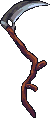
When a peasant war is about to erupt, a scythe is as good a weapon as any.

A weapon tested by millennia of hunting and gathering.

Even though a strike from this club is unlikely to harm a well-armored opponent, it still has all the chances to briefly knock the wind out of them.
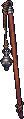
An old farm tool, hastily repurposed for war - neither sturdy nor comfortable to wield.

These bows can often be found in possession of some particularly bold peasants, who secretly hunt on their lord's land.

A simple wooden bow that is remarkably tricky to land a shot with.

It's significantly easier to learn how to use a crossbow than a bow, but there's no avoiding practice either way.

A shepherd's ol' reliable, perfectly adequate for driving stray wolves away from the flock.

The material leaves much to be desired, but the craftsmanship shows no small measure of ingenuity.

If the old tales are to be trusted, Saint Dekar once struck down a forest troll with a sling much like this.

Any journey feels easier with a staff in hand.

So withered that it's almost impossible to think of any good use for it.

The unusual shape allows these missiles to punch cleanly through light defenses and sink deep into flesh.

Increases the chance for ranged attacks to stagger, daze, and stun by 1.25х.

地上到处都是。

普普通通的弓箭,可以打猎,也可以打仗。

Bodkin arrows are designed to penetrate light armor, but they lack raw stopping power.

Bodkin bolts are designed to penetrate light armor, but they lack raw stopping power.

Arrows like these often get stuck deep in the flesh, causing massive bleeding. However, they are rather heavy, cumbersome, and of limited use against armor.

Bolts like these often get stuck deep in the flesh, causing massive bleeding. However, they are rather heavy, cumbersome, and of limited use against armor.

普普通通的弩箭,可以打猎,也可以打仗。

The surface of the blade bears an inscription, faded by time. The words are no longer decipherable, but Arna can still recite them from memory.

Hilda crafted this spear herself from the debris washed ashore after the shipwreck. Her hands remember every scratch and groove on the weathered shaft.

The sheer number of notches can be a source of either pride or dread. Depends on who does the tallying.

In a witch's hands, it lays terrible hexes - and sustains her life by doing so.

The roads are dangerous, the turns unpredictable - the only thing worth trusting is your own blade.

Forging a similar sword is a graduation exam of sorts for apprentice blacksmiths.

Commonly issued to guards of higher rank.

These swords are forged by the dozen in underground smithies, far from prying eyes and unwanted questions.

Will slice through a brigand's gambeson or a beast's hide - and for the militia, it's all that's needed.

Lends itself to a higher grip whenever the enemy gets too close for a full swing.

A handy tool that can be used to carve a path through the thicket, chop some wood, or skin a dead animal.

A traditional weapon of Fjall clans, first adopted by the guards protecting the Northern Borderlands and then - by the rest of the kingdom.

Add a bunch of cheaply-made spikes, and suddenly a simple mace becomes far more deadly and menacing.

Peasants call these clubs "snails" - the curled head adds weight to every blow.

Despite being more dangerous than a simple makeshift club, it's still no real mace.

Village militias are called upon only as a last resort. And when the going gets dire, even a farming tool can become a weapon.

A flail like this can be quite unpredictable, demanding much more finesse than you might initially assume.

As gamblers like to say, always keep an ace up your sleeve and a dagger down your boot.

The very name of this dagger sounds like someone is choking on their own blood.

A crudely reforged hunting knife suitable for butchering game and slitting throats.

A commendable, even if not particularly successful, attempt at forging a real longsword.

This wide blade is best wielded with both hands.

A scourge of deer, wolves, and boars, this weapon was made for large game.

To the knightly estate's great displeasure, this modest peasant weapon is perfectly capable of slipping through gaps in even the heaviest armor.

It doesn't take much time to learn how to use a spear efficiently. For this very reason, it became almost synonymous with peasant militias.

There isn't a single agricultural tool which hasn't been repurposed for military use.

An indispensable tool for pinning down fugitives and wild beasts, it can often be seen in the hands of bounty hunters.

These halberds are typically forged from poor steel: city guards don't see a lot of action.

It would be impossible to count how many noble lords had their lives cut short by this outrageously unassuming peasant weapon.

A home-made axe on a long pole - this weapon sees frequent use in the hands of the Gray Army.

Upon closer inspection, it becomes apparent that this poleaxe was inspired by Skadian bardiches.

A predecessor to halberds, a voulge is still occasionally used by guards and some militias.

Every now and then, the clergy and nobility consider outlawing this weapon - with a billhook in hand even a greenhorn can stand his ground against the heavy cavalry.

Gather a group of peasants, provide them with a handful of longaxes and a clever sergeant, and even a better-equipped opponent might find itself stumped on how to deal with the resulting force.
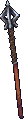
A single solid strike from this polemace will make your enemy forget even their own name.
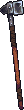
Looks like it used to be a common hammer until some smith reinforced it with additional metal and put it on a longer shaft.

A few rows of spiked iron bands is certainly one way to add to your weapon's heftiness.
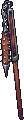
A lucky hit from such a flail can squash a cheap helmet along with the wearer's skull.

The Woodwights were a band of Eeders rebels who gave the royal authorities a run for their money about a decade ago. Eventually, every Woodwight was captured and quartered, but the flails they used continue to live on.

A perfect example of a weapon's effectiveness relying entirely on the user's skill: this bow is pretty much useless in the hands of a novice archer.

It will send an arrow from one end of the glade to the other, but whether it hits the squirrel in the branches - that depends on your aim.

Crossbows are well-suited for hunting - their accuracy and stopping power leave little chance even to large animals.

Rather than relying on your arm strength alone, the belt hook also allows to engage back muscles when drawing the string, which makes reloading this crossbow noticeably less tiring.

Village guards are usually recruited from peasantry, where most are already familiar with a bow. As for town guards, it takes much less effort to arm them with crossbows than teach them archery from scratch.

When defending one's home, no weapon is too humble.

A long-established peasant weapon for hunting small game, demanding both training and a fair bit of dexterity.

Peasants are seldom accustomed to close combat, so outfitting them with slings is a sound strategy - though usually overlooked by noble lords.

Some Aldorian healers place special enchantments on their staves, much to the displeasure of village priests.

A trusty companion for long journeys between holy sites.

Though mainly a practice weapon, it can still cave in the skull of a careless foe.

A tree branch, darkened from age and covered with strange etchings - simply looking at it fills you with a sense of deep-seated anxiety.

An old-fashioned crossbow, restored with care, if somewhat hastily. The opening words of a common Hieronite prayer are carved into its stock.

Necromancers aren't bereft of a sense of humor, albeit theirs comes with a morbid twist: most of them find joy in desecrating graves of the clergy, using harvested skulls as a decoration for their staves.

Most suitable for a fight in tight formation.

Making these swords is a routine job for the Guild's smiths - day after day, night after night...

Skirmishing, plundering, murdering - nothing is impossible with this blade!

A peculiar imitation of eastern blades, this sword is a product of the recent fascination with all things elven.

The edge requires surprisingly little maintenance. If the rumors are true, the tribes of the Yellow Steppe achieve this by treating their swords with some special solution.

These axes don't see much use in Aldor, but in Skadia they are ubiquitous. If the axeblade ever gets too chipped to use, you can always switch your grip and strike with the hammerhead.

Left behind by the Ancestors, the Vaults conceal boundless riches and unspeakable horrors alike. Only the most capable warriors have the courage to explore their forsaken halls.

The trade fleet of Brynn is small but well equipped - each sailor is required to always carry a hatchet in case of a pirate attack.

A weapon frequently carried by the nomads of the Ohirian barrens - every tribesman is given one after surviving his first battle.

It's best to keep your distance when someone is swinging this axe around - it chops limbs and heads with equal ease.

If there's anything that dwarves appreciate more than booze and looting, it's a good axe.

Light enough to swing with relative ease while still carrying enough weight to hack through armor and shields.

It sits snugly in the grip, ideal for lightning-fast assaults on straggling enemy caravans.

A hit or two, and this morgenstern will be the last star your enemy will ever see.

A bludgeon is a surprisingly deadly piece of gear. If anyone knows their maces, it's Skadians.

What's the main advantage of flanged maces? They don't get stuck when they crush skulls and plate armor.

A shishpar is a flanged mace used by soldiers of Jibey and the Maaf Empire. It particularly excels at punching through scaled armor, which is quite popular in those lands.

Has the capacity to injure even a heavily armored foe, but there are far better options if your opponent is light on defenses.

The design has unmistakably Brynnian roots, blending a multi-pronged hammerhead with a sharp spike, typical of the South.

Skadian warhammers are forged to last and are sought after even outside of their country of origin.

Has the potential for many surprises - whether they harm or help the opponent is up to the wielder's skill.

The ease of maintenance and lethal power of flails make them a staple choice among the Vehement, particularly in battles against the undead.

With its disk-shaped guard and pommel, this dagger offers a firm grip while keeping the blade from driving too deep into the enemy's body.

Baselards are so popular among both the nobility and townsmen that they are often viewed as an accessory rather than an actual weapon.

You never know, it just might save your life one day.

Every self-respecting merchant has a similar dagger. It can add more weight to your words when dealing with disgruntled clients - unless they come in numbers.

These swords can improve your chances when fighting a heavily armored opponent, making them a popular choice among common foot soldiers.

Seasoned soldiers expect to be provided with better weapons, usually purchased with the gold directly from their lord's coffers.
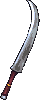
Even to this day, Nistrian smiths continue producing certain types of antique weaponry, although they use steel instead of iron now.

The backbone of the Magistrate's army, the Vanguard, is formed by mercenaries. A decent pay, plentiful drinks, and honorary swords make for a surefire way to earn the loyalty of the dogs of war.

When properly sharpened, the broad edges of the "ox tongue" spearhead bite into flesh, leaving gruesome, slow-to-heal wounds.

Its main purpose is to halt the enemy cavalry in its tracks, and it does so with flying colors.

The dwarves of Fjall rarely use spears in combat, deeming them a hunting weapon, unworthy of the battlefield.

A brandistock is a fairly uncommon weapon which is sometimes issued to sergeants of the Road Guard.

A halberd is beloved by the Aldorian infantry for its versatility. Being able to use your weapon for both slashing and thrusting attacks is a valuable asset on the battlefield.

It's said that Aldorian smiths got the idea of forging such a peculiarly shaped weapon from the inhabitants of the Bronze Isles.

Such poleaxes are forged by the Council weaponsmiths with less metal than usual, allowing for cheaper production.
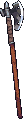
It takes a truly impressive amount of strength and stamina to handle this axe efficiently.

It didn't take long for Fjall dwarves to adopt Skadian bardiches. And thanks to their mercenaring varangs, this weapon shape became known to Nistrians as well.

All these spikes offer plenty of options: can use them to intercept an incoming strike, pull down a rider from their horse, finish off a wounded opponent...

This weapon can often be seen in the hands of Skadian horsemen. They weren't the ones who first started using it though: Skadians borrowed the design from the Poleds, a tribe inhabiting the shores of the Icy Sea.

While many will deny it, Aldorians actually learned a few things from dwarves - how to make such axes, as an example.

If blunt force alone isn't enough to get through your opponent's armor, this polemace also has a spike for precise jabs to the neck.

Can break one's jaw just by trying to spell its name.

It's best not to find yourself on the receiving end of this warclub - its strikes not only shatter bones but also leave deep puncture wounds.
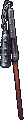
The majority of the Cowls, the fanatical followers of Neer, are former peasants, so it comes as no surprise that their favorite weapon is a heavy flail.
Even plate armor can only do so much when it catches a solid hit from a full-cast flailhead.

The sooner you start, the better your chances of mastering the bow - which is why in Aldorian villages training begins in early childhood.

Dwarves don't hold much respect for bows. They are usually handed out to youngsters who aren't experienced enough to fight on the frontline.

Yew is generally used to make longbows, but sometimes craftsmen settle for something more modest.

For many, the first clash with Jarimad mounted archers is also the last: deadly on foot, they are even deadlier from the saddle.

As the boastful proverb goes, as long as Aldor has at least a dozen longbows, it'll remain unconquered.

A crossbow used by both sides of the conflict - it's equally popular with the soldiers of the Council and the mercenaries of the Magistrate.

Soldiers of the Maen garrison hold a deep appreciation for simplicity, light weight, and convenience. This crossbow combines all three qualities in its design.

A cranequin is a cunning mechanism which made crossbows even more deadly than they had already been. At least a dozen engineers and master craftsmen from all over Aldor compete for the title of its original inventor.

Reloading a crossbow with a lever offers much greater convenience without sacrificing the weapon's draw weight.

Light to carry, yet far from harmless - a weapon well suited for clashes with village guards.

Brought out when a scouting mission calls for a probing strike.

The Ohirian barrens offer nothing but sand and rocks, yet the tribes who dwell there make do with little else.

While suppressing the Eeders' rebellion a dozen years ago, the nobles received an unexpected and rather unwelcome reminder: staff slings are far deadlier than one might assume.

The siege caught Brynn unprepared, and the defenders soon realized their supply of arrows would not last. To combat this, they quickly crafted and distributed a great number of slings.

Aldorian monks' staves are blessed by the Host themself to help the faithful endure the hardships of daily toil and distant travels.

The headpiece in the form of a sea leviathan is carved with such attention to detail that it looks like it could start spewing flames at any moment.

With enough dexterity, this staff's heavy knob is all you need to beat the living daylights out of a slow-witted brigand.

Quite a few mages are drawn to the Vehement ranks, seeking to apply their knowledge and skills for the benefit of the common folk.

After surviving the Academy and the first handful of battles, most mages usually seek to invest their earnings into a proper staff.

The ornate pommel bears the crest of yet another noble house that did not survive the war.

Entire wars have been fought in Fjall to claim such a sword - and the title that comes with it.

Local noblemen have an ancient tradition of exchanging daggers. As a rule, it's done by plunging them into each other's back.

No need to spend countless crowns to convince the onlookers of your great wealth: an elegant gilded dagger on your hip will speak for itself.

This sword has witnessed many a front line and survived plenty of close battles.

Skonfert is famous for its furnaces and masterful smiths. In times of great conflict, it was there that victories were forged.

A sword of newfangled design that has been growing in popularity among the mercenaries of the Grand Magistrate.

Light, durable, sits well in hand, and can most certainly put an arrogant knight in his place.

Some of the local aristocrats favor eastern sabers over traditional Aldorian swords - despite any weird looks they get from their subjects.

This small, easy to carry hatchet comes into play when a sword just doesn't cut it anymore.

A weapon of choice among the corsairs of the Bronze archipelago, utterly indispensable during boardings.

A squad of competent engineers can determine the outcome of an entire siege. Therefore, it pays to keep them well-protected and properly armed: tunnel skirmishes beneath the walls are a common occurrence.

A frequent joke among the free companies is to hand one of these to a fresh recruit during drill, then stand back and enjoy the spectacle.

Over the last few decades, Aldorians have attained incredible mastery in forging heavy plate armor. Axes like this are simply an attempt at evening the odds.

A reliable weapon which doesn't require much skill or maintenance, an easy choice for many common soldiers.

The Elder Prince's druzhyna doesn't give ground even in the face of insurmountable odds. It's most distinguished members may receive a great privilege - a gift of an honorary weapon granted personally by the Prince.

A mace that offers the best value for its price - it's simple, easy to wield, and utterly lethal.

After the Maafs conquered Jarimad, the nomad chieftains presented their bozdogans to the conquerors - who, unexpectedly, took quite a liking to the weapon.

A heavy warhammer is one of the few weapons that can give an infantryman a fighting chance against a dismounted knight.

Initially crafted in jest, this hammer shape quickly caught on and is no longer treated as an outlandish curiosity.

A typical weapon of Zeinesh mountain brigands. During times of conflict, they descend to the flatlands, offering to fight for the highest bidder.

Only a seasoned fighter can handle a two-headed flail without embarrassing themselves.

Knightly etiquette dictates that a mercy blow to an incapacitated opponent can only be delivered with this dagger.

In southern regions of Ahjat, it would be considered a traditional coming-of-age gift to a young free man.

Some duelists become so apt at wielding a dagger that even sword strikes are no challenge for them to parry and counter.

The presence of a dagger on one's belt is what sets apart an experienced warrior from a greenhorn: it gives you an indisputable edge the moment the fight moves to the ground.
As mercenaries like to jest, the longer the sword, the shorter the opposition.

A well-made sword, forged from good steel and completely bereft of any trifling decorations.
Initially these swords were used only by the nobility of the Firn foothills, but now they can be found all over Aldor.
Single combat with two-handed swords is a form of art, where your reflexes and precision matter just as much as brute strength.

A weapon often used by sergeants of the Magistrate. Such blades aren't cheap but definitely worth it.

A distant cousin of a goedendag, forged by a skilled weaponsmith.

As one prominent Aldorian commander used to say, wars are waged by knights but are won with spears. Spears like this one.

When it comes to inventing weapons for killing their own kind, the creativity of people never fails to achieve new heights.

Halberds were originally a mercenary weapon, so their widespread use among the Grand Magistrate's soldiers is hardly surprising - at least half of them hail from free companies.

It's a common practice for such polearms to be adorned with vibrant scraps of cloth, helping soldiers distinguish friend from foe as they head into the fray.

An axe capable of cleaving open both the laminar armor of maaf riders and the breastplates of Nistrian cataphracts.

Poleaxes started to gain popularity in Aldor not long before the war, as the need to combat the increasing use of heavy armor had been becoming more and more apparent.

When the Aldorian army was routed by the Nistrian cavalry at the battle of Thorny Hill, the Eeders militia took the humiliating defeat to heart and started attaching special anti-cavalry hooks to their axes.

Even though it bears a resemblance to a spear, thrusting with a glaive is not very effective - it's basically a broad sword attached to a shaft.

It's hard to imagine armor which would protect from a direct hit with this axe.

Jarimad nomads fight on foot only when there's no other option, but when they do, they rely on these axes - the design proved its usefulness through many battles against the heavy maaf infantry.

The mace head is shaped in such a way that it's equally effective against both lightly and heavily armored opponents.

Constant wars with Aldor left a deep mark on Nistrian warfare. Naturally, they've become quite successful at combating heavily armored troops.

Among the Magistrate mercenaries, polehammers are almost as widespread as halberds.

The convenience and versatility of these polehammers garner them praise from the veteran soldiers of both the Council and the Magistrate.

There aren't that many helmets or cuirasses which can survive a strike from a three-pronged hammerhead.

Sometimes the simplest solution is the best one - this maul is a testament to it.
The two-handed flail is hardly the most widespread weapon. The reason is simple: few soldiers possess the strength, skill, and finesse to master it.

Armed with such a bow, an experienced archer can single-handedly stall the advance of a full squad of light infantry.

The Firns had a reputation not only as excellent marksmen, but also as gifted bowyers: their bow designs still remain in common use.

Whittling the enemy down with agile maneuvering and constant arrow barrages from a safe distance is the preferred tactic of the Nistrian light infantry.

The Zeineshes of Nistra are among the most skilled mounted archers on the entire Continent, rivaled only by the nomads of the Ohirian barrens and Jarimad.

The production process for these famous longbows isn't exactly common knowledge - the denizens of Eeders tend to keep to themselves.

A while ago, His Lordship Brodwyn der Razen made it his personal mission to fit his soldiers with crossbows of this design. His success inspired some other prominent Council commanders to eventually do the same.

A crossbow fitted with a more sophisticated cranequin than usual, allowing for a noticeably smoother reloading process.

Spend a few months actively using this crossbow, and even village fair strongmen will envy your muscles.

Not all free companies are sent to the front - some are contracted to protect supply convoys and undertake other auxiliary duties.

Attrition through small engagements is certainly one way to tip the decisive battle in your favor.

A soldier adept with the sling can be every bit as lethal as a seasoned archer or crossbowman.

These staves, still bearing the mark of the Host, are the main proof of the clerical estate's divine patronage.

Seemingly cumbersome, this steel staff is actually quite light. It's also an excellent conduit for magic.

Distant Skadia is notable for its powerful spellcasters, known as volkhvs. There must be quite a story to this staff.

For years, the Maen Academy was the crucible that forged battlemages in service of the crown. Predictably, it fell on hard times after the King's death and the rise of the Gray Army.

Every so often, there's simply no time for casting spells, and fighting up close becomes the only option.

A staff fashioned from nigh indestructible stone, yet somehow it still weighs lighter than wood.

Cryomancers love to joke about this staff's bone-chilling properties. The last time anyone laughed at this pun was a century ago.

Don't even try prying the enchanted amethyst out of this staff's headpiece - that is unless you want to spend the rest of your life outside of this plane of existence.

The spherical headpiece radiates extreme heat, which, paradoxically, doesn't seem to cause any harm - at least for the time being...

The Pyromancy Circle used to spread malicious rumors that the death of Frid Konnoken, the founder of the Electromancy Circle, was caused by him foolishly allowing a similar staff to come in contact with a street puddle.

Astromancers claim such staves to possess an astonishingly precise ability to model the motion of our... What do they call it? Right, our "planet".

The open palm on top has a strange tendency to attract glances... A truly mesmerizing feeling.

In knowledgeable hands, this staff can turn even the weakest poison into a deadly one.

In the times of the Radiant Wars, many high-born lords were more than happy to join King Etbert's army. Some did it to earn the Host's favor, others - for more practical reasons, such as glory and new riches.

A sword from King Etbert's personal armory. Clearly not his favorite, otherwise it would have followed the monarch into his tomb.

Forged by great weaponsmiths in times immemorial, this blade still carries the blessing of the Host.

These swords were intended for King Etbert's bodyguards. After the monarch's death, at least several of them ended up stolen from the royal arsenal.

Despite being at least half a millennia old, it somehow continues to perfectly hold the edge.

The gilded guard is decorated with intricate eastern ornaments - this weapon is a true work of art.

Engraved on the blade is a phrase in Sentian Aldorian: "To Gill Korde, for the valor and courage demonstrated by him and his troops at the Battle of Arnem."

Entire sagas have been woven about the martial valor and tireless spirit of the legendary konung Haakon the Graybeard. Under his command, the dwarves managed, if only briefly, to conquer several Skadian cities.

A tabar is a symbol of maafs, the warrior estate which holds the most power in the Ahjat Empire. Even the nobility require a special permission to arm themselves with one.

A successful attempt at making an axe look luxurious without sacrificing its battle performance.

For the longest time, Aldorian nobles had been rather dismissive towards axes. Their perspective took a turn when the late King Etbert introduced a fashion for richly decorated axes, turning them into a symbol of power.

The Council's nobles expected a swift and decisive victory - and miscalculated. As a result, baronial weaponry is now being passed down from one new owner to the next.

Maces are held in great regard in Skadia, where even high-born military commanders don't scoff at using them on the battlefield - although this particular weapon looks somewhat ceremonial in nature.

Ghazi are warriors of the Jacinth Kingdoms who voluntarily joined the holy war against King Etbert's invasion. Naturally, their ranks included many highborn elves...

It's clear as day that the master smith, who meticulously crafted this weapon, put his heart and soul into it. The lord ordering it must have had money to spare.

The sentiment that maces are a weapon of the peasantry is long obsolete. Adorned with gold and horsehair, this warhammer demonstrates it better than anything.

A true piece of art - many weapon connoisseurs would pay through the nose to acquire it for their collection.

The seal on the pommel leaves no room for interpretation: this exotic dagger used to belong to Orro Denye, the one and only Duke of Bronza.
The blade is inscribed with words of dedication to one Idrich Jorg of Aldwynn.
Blademasters are paid double wages to fight on the frontline - and they don't need to be asked twice to demonstrate why this expense is well-founded.

The handle makes this sword's origins crystal clear - Brynn weaponsmiths have a soft spot for elegant and somewhat ostentatious detailing.

Despite the strict isolation, some goods still get smuggled from the Bronze Isles to Aldor. A lot of the time the contraband includes various swords: if anything, the islanders have had a lot of practice crafting weaponry.

The Faceless are the Palace Guard of the Great Jacinth and are considered the best warriors in all the Elven Kingdoms. Among other feats, they distinguished themselves on the frontlines of the Radiant Wars by repelling the advance of King Etbert's army.

The Radiant Wars offered plenty of opportunities to make a show of one's piety: the nobility spared no expense in adorning their weapons and armor with symbols of the Host.

The Castelliers were the Bronzian branch of the Order of the Triune Hand, famed for their relentless fight against piracy and the construction of impregnable fortresses, from which they took their name.

At some point, it likely belonged to a Sentian patrician with a keen interest in the weapon traditions of the Bronze Isles.

The famed Brynnian weaponsmith, Etien Morel, crafted many masterpieces in his lifetime, and this elaborate halberd is one of them. Tragically, his life was cut short when he perished during the siege of Brynn, burning alive along with his workshop.

It is said that in the very heart of the desert between Hazzun and Al-Qaza lies the Labyrinth, guarded by silent warriors. Whatever is kept within remains secret, for no one who entered it has ever returned alive and sane.

The stamp of the Guild makes it safe to assume that this voulge was intended for some high-ranking Magistrate commander.

A longaxe is a highly unusual choice for a ceremonial weapon. And by the looks of the decorations, the original owner shelled out a pretty sum for it.

Don't let the glint of gold mislead you: despite its elegant ornaments, this polemace shatters skulls and bones just as efficiently as its plain counterparts.

It looks like one of the polehammers awarded by Duke Arno di Berro to captains of the Falcon Plume company for their display of heroism during the defense of the Northern Gates.
A customary weapon of the Royal Armorbreakers - a renowned guard unit currently employed in the service of the Council.

Back in the day, these flails were a symbol of the exceptional strength and impeccable training demonstrated by the marshals of the Triune Hand Order.
This marvelous artifact appears to be at least millennia old. It's a mystery how it hasn't yet rotted away.
A prize from the Aldwynn Tournament of 407, claimed by Sir Tibalt der Wald, who impressed the King himself by hitting five moving targets squarely in the center in just one minute.

The deserts of Ahjat are harsh, fickle, and teeming with dangers. Fortunately, the Sand Guard, tasked with escorting caravans, knows exactly how to handle them - whether it's raiding nomadic bands or something even worse...

It was most likely crafted for a wealthy Royal Ranger, who had been granted a fief for his loyal service.

Any weapon has a potential to be transformed into an object of art. It's the age of redundancy after all.

A royal huntmaster is defined by three duties: the king should have plenty of game to pursue, he must never return from the hunt empty-handed, and he shall always remain safe and sound while doing so.

Not too long before his demise, King Etbert ordered to form a unit of crossbow-wielding guardsmen. The most skilled Aldwynn bowyers were tasked with providing the weaponry, but they'd managed to produce only a few dozen crossbows before the monarch's death.

To the nobility, the sling is more a plaything than a true weapon, fit only for occasional displays of skill at a tournament.

The legendary templar Theobrand was born and raised in a poor shepherd's family. A master of the sling since childhood, he kept up the practice even after joining the Order.

The multiple attempts to marry Hieronite teachings with elven rituals produced a number of prominent Aldorian saints capable of glimpsing into the future - nevertheless, most of the clergy rejected this path, branding it as a perversion of the church traditions.

Hundreds of years ago, this boar-shaped piece was carried at the head of countless battle-hardened phalanxes.

Kasper Stern, a legendary sorcerer and mentor at the Maen Academy, lived about a century ago and was an exceptionally versatile individual. Conrad II Ironhand held the mage in such high esteem that he entrusted him with leading a part of the royal army - an unprecedented decision!

"Sky-readers" was the name given by King Etbert's soldiers to the elven oracles who fought on the Jacinth's side during the Radiant Wars. Many attribute the Aldorian army's defeat to their involvement, for how can one defeat an enemy who sees the outcome of every battle in advance?

The reclusive Sages are long-time protectors of Aldor, yet very little is known about them. There seems to be a growing rumor that many of them have disappeared without a trace over the past few years.

This staff saturates the surrounding air with a heavy stench of stale blood.

At the end of the day, few things can beat fine elven craftsmanship: it clearly took a lot of skill to create a staff this magnificent.

A single glance at this noble blade is all it takes to realize that only a select few are worthy to wield it.

There is an etching on the blade's surface, pledging loyalty to the Host and the court... the usual kind of court.

It strikes a perfect balance between aesthetics, battlefield performance, and comfort of use - such swords are often carried by captains of the most renowned mercenary companies.

Half the stories about distant Jibey one way or another mentions its legendary scimitars. Acquiring one in Aldor costs a fortune.

Invented by an unknown Aldwynn smith, this design quickly caught the eye of the local knights.

A weapon of rank, proudly carried by captains of the Brynn garrison. The way they strut about with these axes on their belts is a sight to behold.

As the centuries-old tradition of knightly ransom becomes a thing of the past, aristocratic weapons grow increasingly more deadly, aiming to kill the opponent right on the spot.

A legacy of an age when the skill and artistry of the dwarven smiths were the envy of the entire Continent.

No armor can resist a blow dealt with such a monstrously heavy axeblade.

Such axes are well-suited for mounted combat. Aldorian knights often choose them over the rest of their arsenal when they ride into battle.

Aldwynn smiths are known for two things: crafting the heaviest and the most durable armor in Aldor and forging arms that can chop through it.

Perfectly suited for knocking the life out of your opponent with a single well-placed strike, once you've gotten them off-balance.

The Chervenian nobility is small but proud. Centuries of rivalry with the rest of Nistra's aristocracy have driven them to cultivate a unique style in dress and arms, ensuring they always stand out.

Knights are demanding customers, expecting both excellent combat performance and elegant appearance from their weapon - hence the elaborate shaping of the head and handle.

With the exception of Aldwynn weaponsmiths, there aren't that many craftsmen in Aldor who can produce a mace of similar quality.

In the hands of mercenary captains, warhammers are mainly treated as a symbol of command. Nevertheless, this doesn't prevent them from being highly effective tools of war.

In the Aldorian tradition, a sword is the only "knightly" weapon there is. Lately, however, the nobility has been demonstrating a growing appreciation for warhammers and maces.

A short-lived fad had weaponsmiths in each major Aldorian city competing fiercely to create the most extravagant warhammer. This one was clearly among the winners.

Flails are considered to be a weapon of the low-born, but sometimes they are used by lords as well. Such "noble" flails are crafted with quality in mind.

A risky weapon for those who are confident in their skill.

Elven flails serve mostly a ceremonial purpose, carried only by the most skillful of warriors to flaunt their status. No money is spared to make these weapons look the part.

The apparent unity of Jibey, Ahjat, and other realms of Jacinth is merely a mirage. In reality, each is a patchwork of diverse tribes, khanates, and emirates, with every local "monarch" wielding almost absolute power over their people.

The Grandmaster was the highest rank in the now-disbanded Order of the Triune Hand, yet their flails of office bore almost no adornments, honoring the vow of austerity.

Slender and elegant - like a sonnet spoken over the grave of an old foe.

One of King Etbert's decrees prohibited his vassals from quarreling with one another. Therefore, most conflicts began involving middlemen - assassins for hire, for instance.

On the Bronze Isles, every dispute is resolved in a duel. These daggers are a product of the times.

In the aftermath of the Council's crushing defeat under the walls of Brynn, many patricians decided to purchase themself a quillon to at least partly resemble Duke di Berro, whose daring deeds allowed the Magistrate to emerge victorious.
It could have easily belonged to either a small-time baron or a duke - basically the kind of person who doesn't skimp on expanding their arsenal.
A flamberge's wavy blade deals such dreadful wounds, that the voices for prohibiting it outright grow louder with each passing day.

Technically not a sword but a very large knife - though who besides weapon collectors would lose sleep over such a distinction?
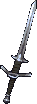
For a mercenary warband's captain, a greatsword isn't just a weapon but a proof of their rank and combat experience. And if they need to spend some extra gold to make it stand out, then so be it.

This two-handed sword was created with pure functionality in mind: its strength lies in perfect simplicity and great balance.

Another great example of the Bronze Isles craftsmanship, where a weapon's aesthetics is prized just as much as its killing potential.

The protrusions on both sides of the spearhead allow for some fancy moves, such as parrying sluggish sword strikes.

Unlike a common pitchfork, a spetum has its prongs pointed at different directions, which makes them much more suitable for catching enemy blades.

There are two kinds of halberdiers: those who favor thrusting and those who favor slashing. But in case you want to do both, this is a weapon for you.

This halberd's name comes from its vague resemblance to a scorpion's tail and the ability to deliver equally painful "stings".

Aldorian knights are slow to accept novelty, but the numerous advantages of poleaxes can persuade even the most stubborn.

A captain's poleaxe stands out even at a distance - a rallying point, and a reassuring sign that the company is still in the fight.

A heavier version of an eederax: the traditional hook became a part of the axeblade itself.

Skadian bardiches are a weapon of status. Only the greatest warriors - the champions and the retinue of Skadian princes - are allowed to carry them.

It hails from the area around Forholt, where it was once carried by mounted guards. Contrary to its name, this weapon has more in common with a bardiche than a staff.

Despite its formidable appearance, this axe is rather unwieldy in a real fight.

Longaxes are exotic to elven lands - the peoples of Jacinth who use them can be counted on the fingers of one hand.
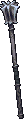
Well-suited for fighters who want their every strike to leave the opponent in the dirt.

Polehammers have recently begun to rise in popularity as a weapon of choice for knightly jousts.

A line of soldiers bristling with such polehammers is a force that can threaten even the heavy cavalry. Especially the heavy cavalry.

This weapon is a world apart from the tool which originally inspired it - a humble pickaxe.

Elves call this hammer shape a "bull horn" for the distinctive spike on its back end.
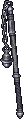
The shift in attitude towards this decidedly non-chivalrous weapon was driven by the rising number of treatises extolling the benefits and virtues of sparring with flails.
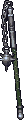
Two-handed flails may have originated on tournament grounds, but it's a rare occurrence to see a noble lord using one as he goes to war.

Has enough power to knock a charging knight from his saddle.

This bow's curved shape allows it to send arrows further and with more precision than usual, though it has a bit of a kick which takes time to get used to.

Countless Nistrian commanders, standard-bearers, and mages were left forever in Aldorian soil during the Nistrian Wars. The archers responsible could expect little mercy in return.

The Falcon Company is one of the most infamous detachments of the Magistrate's army. Their crossbows were fashioned by master craftsmen of Brynn in the likeness of elven bolt throwers.

These crossbows are excellent at taking out siege engineers even when shooting over large distances
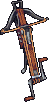
The brutal killing power of this crossbow gave birth to rumors that even soldiers hiding behind mantlets aren't safe from the bolts launched with it.
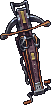
With crossbows like these, a citadel garrison can tie down an entire army for months on end.

"As vexing as a Sentian slinger" - a saying dating back to the wars of Aldor's unification, still in use in the kingdom's western reaches.

In the eyes of the Fjall dwarves, the sling is a far more honorable weapon than the bow - so much so that even battle-hardened veterans readily wield it in combat.

To this very day, certain noble Firn lineages still preserve the tradition of instructing male heirs in the art of the sling.

The ranks of Spellweavers only accept the best of the best - even prominent Academy mentors often find themself snubbed and rebuked.

Staff duels are a staple of fencers' training, with some fighters growing so confident in their prowess that they don't shy away from bringing the weapon into real combat.

A distinguished staff for a distinguished mage: with gilding this lavish, there is plenty of precious metal for magic to course through.

Templars of the Order united chivalric discipline and magic mastery with the relentless study of the Host - all in the hopes of earning the gift of thaumaturgy.

This enchanted staff's headpiece was designed for conducting all types of magic.